
Soul Tarot: A Deck and Guidebook for Healing and Self-Discovery by Lindsay Mack, with illustrations by Chelsea Granger, is a tarot deck designed to bridge traditional tarot symbolism with personal healing, self-reflection, and intuitive growth. The deck invites readers to approach tarot as a practice of self-inquiry, emotional awareness, and spiritual exploration.
As someone who enjoys decks that prioritize personal development and meaningful reflection, I was immediately drawn to the promise of a healing-centered tarot experience. This deck positions itself as both a divination tool and a companion for inner work, making it especially appealing to modern tarot readers seeking depth, empowerment, and accessibility.
Unboxing + Flipthrough
My First Impressions
My first impression of Soul Tarot was that it feels intentionally welcoming. Rather than presenting tarot as mysterious or intimidating, the deck encourages curiosity and personal connection from the very beginning.
The deck clearly reflects Lindsay Mack’s philosophy of tarot as a tool for self-discovery. Readers who are interested in shadow work, healing journeys, personal growth, and intuitive development will likely feel at home with this approach.

The Artwork
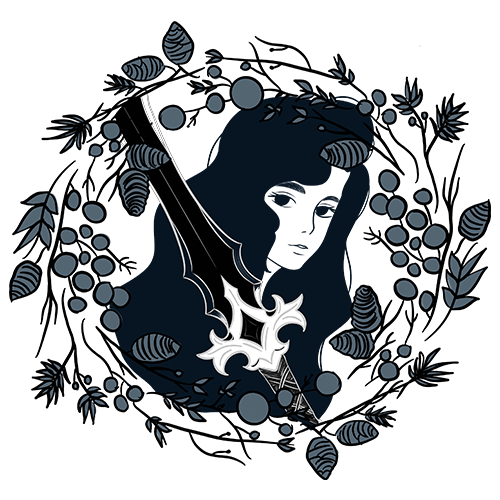
Chelsea Granger provides the artwork for Soul Tarot, creating all 78 full-color illustrations that support Lindsay Mack’s healing-centered approach to tarot. The deck’s visual language is intentionally distinct from many traditional tarot decks, reflecting its focus on self-discovery, intuition, and personal growth.
My experience with the artwork was mixed, particularly during my first few readings. While I appreciated the originality of the illustrations, I initially struggled to connect with the imagery and found it challenging to understand the deck’s symbolic language. Unlike decks that closely follow established Rider-Waite-Smith imagery, Soul Tarot often communicates through its own visual vocabulary, which required more time and repeated use before the cards began to make intuitive sense to me.
As I spent more time with the deck and guidebook, I gradually developed a better understanding of how the imagery functions within Mack’s interpretive framework. The symbols and visual cues started to feel more cohesive, and I found myself relying less on traditional tarot associations and more on the deck’s unique perspective.
For readers who enjoy learning a deck’s individual symbolic system, this can be a rewarding process. However, those who prefer immediately recognizable tarot imagery may find the learning curve steeper than expected. This is not necessarily a weakness, but it does make Soul Tarot a deck that benefits from patience and repeated exploration.

Box, Card, and Finish
Soul Tarot comes packaged in a beautiful keepsake box with an additional interior card compartment. The presentation feels premium, thoughtfully designed, and highly giftable. The overall aesthetic complements the deck’s focus on healing and self-discovery, creating a lovely first impression.
Unfortunately, the interior card box was one of my biggest frustrations with the production. The fit was incredibly tight, to the point where removing the cards felt like a workout. I practically had to channel my inner She-Hulk just to get them out. Once I finally freed the deck, I chose not to put the cards back into the inner compartment because I was concerned that repeated use would damage the card edges. After looking at reviews and discussions online, I found that other readers had experienced similar issues with the snug fit.
Thankfully, the cards themselves are outstanding.
The cardstock is exactly the kind of quality I love to see in a tarot deck. It feels durable while still remaining comfortable to shuffle. Combined with the luxurious matte finish, the deck feels premium from the moment it is in your hands. The matte surface showcases the artwork beautifully, reduces glare, and gives the cards a tactile quality that makes handling them a pleasure.
For collectors and deck enthusiasts, the cardstock and finish are among the strongest aspects of this release. In fact, the card quality is a collector’s dream. While the overly snug inner box may frustrate some users, the cards themselves feel exceptionally well produced and built for regular use.

Guidebook
The guidebook opens with an introduction in which Lindsay Mack shares the story behind the deck’s creation. Readers learn that creating a tarot deck had been a dream of hers for more than a decade and that she had been exchanging emails with her favorite artist, Chelsea Granger, since 2017 in the hopes of one day collaborating on a project together. Knowing the history behind the partnership adds a personal touch and highlights the care, intention, and years of thought that went into bringing Soul Tarot to life.
Beyond the introduction, the guidebook includes sections on how to use the deck, how to work with the cards, tarot prompts, spreads, and individual card interpretations. Each card entry includes both upright and reversed meanings, but the actual descriptions are quite brief, with each interpretation consisting of only around four to five sentences.
This was the area where I found myself wanting more. Considering Lindsay Mack’s reputation for offering deep, thoughtful, and insightful teachings through her podcast, courses, and work with Tarot for the Wild Soul, I expected the card explanations to provide more depth and exploration. The guidebook gives readers a foundation for understanding each card within the Soul Tarot framework, but I often wished it went further by unpacking the symbolism, the emotional layers, and the specific imagery chosen for each card.
Because Soul Tarot uses a visual language that differs significantly from many traditional tarot decks, more explanation around the artwork and symbolism would have been especially valuable. A few additional notes about why certain elements were chosen, how they connect to the archetype, and what inspired the imagery would have helped readers build a stronger relationship with the cards.
Readers who are already comfortable working with intuitive or non-traditional decks may enjoy the space to form their own interpretations. However, those who are hoping for the same level of depth and guidance that Lindsay is known for through her other offerings may find the guidebook leaves them wanting more. Despite this, it remains an important companion to the deck and provides the foundation needed to begin learning its unique symbolic language.
How the Deck Works
At its core, Soul Tarot is designed around Lindsay Mack’s Soul Tarot framework, an approach that is inclusive, trauma-sensitive, heart-led, and intentionally non-predictive. Rather than using tarot to forecast future events, the deck encourages readers to explore their inner world, build self-awareness, and reconnect with their intuition.
One of the most distinctive aspects of the deck is its visual language. Instead of relying heavily on familiar Rider-Waite-Smith imagery, Mack draws inspiration from nature, ecology, mythology, cosmology, and the natural world. In my interview with her, she explained that these images have always been central to the way she teaches tarot. For example, she described The Fool not as a traveler standing at the edge of a cliff, but as a radicle, the first root that emerges from a seed during germination. Both represent a leap into the unknown and the courage required for growth.
Understanding this philosophy helped me better appreciate the deck. My initial challenge was that I kept looking for traditional tarot symbolism, while the deck was asking me to learn an entirely different visual language. Once I understood that intention, many of the cards began to make more sense, even if I still wished there had been more detailed explanations of the symbolism within the guidebook.
Reading Style and Themes
Because of its reflective nature, Soul Tarot feels best suited for introspective readings rather than quick answer-seeking sessions.
I particularly enjoyed using it for:
- Daily reflection pulls
- Journaling sessions
- Self-discovery work
- Emotional check-ins
- Spiritual growth and personal development readings
The themes that consistently emerged for me included healing, authenticity, intuition, resilience, self-compassion, and personal transformation. The deck encourages readers to examine patterns, beliefs, and emotions with curiosity rather than judgment.
While it can certainly be used for traditional tarot spreads, I found it most effective when I approached it as a conversation with myself rather than a tool for prediction.
Interview with Lindsay Mack
To learn more about Soul Tarot, I asked Lindsay Mack about the inspiration behind the deck, the artwork, and the creative process.
Getting to Know Lindsay
Eisel: For readers who may be discovering you for the first time, can you tell us a little about yourself and the work you do?

Lindsay: Hi! My name is Lindsay Mack, and I’m an intuitive Tarot teacher, bestselling author of Tarot for the Wild Soul and The Soul Tarot Deck, and the founder of Tarot for the Wild Soul. I teach an approach to the cards called Soul Tarot, which is an inclusive, heart-led, trauma-sensitive, non-predictive framework,
rooted in common sense and critical thinking. Through my popular online courses, retreats, workshops, and offerings, I’ve had the honor of teaching Soul Tarot to many tens of thousands of people from all over the world. I am also the host of the beloved podcast, Tarot for the Wild Soul, which has been downloaded over eleven million times since it was created. As a non-binary, queer, chronically ill survivor of abuse and trauma, I am passionately dedicated to holding space for those who are suffering and trying to move back into deeper relationship to their own wild magic and knowing. I am also a death doula (or death care worker), and am set to begin pursuing my Masters in Divinity in Interreligious Chaplaincy in September 2026.
E: What first drew you to tarot, and what made you stay?
L: I always identified as a witch (still do!), and felt drawn to anything spiritual and rooted in a sense of magic. I was also an abused kid, and was (in a deeper way) always stretching my arms out to some kind of deeper wisdom, a holy figure that could hold me through the devastation that I was experiencing. I saw a deck of Tarot cards at a used bookstore in NJ where I grew up at the age of 12, and was instantly drawn to them, even though I didn’t know anything about Tarot. I bought them and a gaggle of Tarot books on the spot, and set out to teach myself. I read for friends all through middle school, high school, and college, and that waxed and waned into my adult years. It’s now a really deep and rich tool for me, connected to my own lineage of living, but I cannot really tell you why I stayed with it, other than that I never really considered ever walking away from it. It’s just a very deep kinship, and something I have great passion for.
E: Your work is often described as trauma-informed and rooted in self-compassion. How did that approach develop?
L: I came to Tarot for support through my own relationship with profound trauma and abuse, and it was a life saving helper. Most of the Tarot books I encountered as a kid were pretty harsh and not very trauma informed, so I began to set out on my own path and learning journey with the cards pretty early on. My Tarot deck has been an unbelievable mirror and invitation into self love, and into a gentle, slow, steady pace of life when I only knew chaos. The approach that I teach and serve from has been formed by the work I’ve done, the path I’ve journeyed on personally, through what I’ve survived, and has been strengthened by continuous learning — through both experience and trainings — as a helping professional through the years. I am certainly not perfectly trauma informed, but I don’t know another way to be in the work I do. It is baked into the very foundation of my approach and my life.
E: What do you hope people experience when they work with you, your teachings, or your creations?
L: I hope that they feel empowered, witnessed, liberated, and curious.
The Deck Itself
E: Soul Tarot takes a very different visual approach from traditional tarot decks. What inspired that direction?
L: The Soul Tarot Deck is a mirror for the work I do within Soul Tarot. With Soul Tarot, I have been using visual metaphors for the cards that draw on nature, ecology, cosmology, myth, and magic since I started teaching professionally. I am more inspired, guided, and rooted in my relationship with nature and the natural world than anything else in this life, and have found nature to be a life-saving mirror in my journey through surviving abuse, through celebrating my queerness, through coming out as non-binary, being a mother — everything. It has also always existed as a visual language for me, which feels deeply tethered to the Tarot.
The Fool might be tough for someone to connect with if they’ve never had the privilege to take a big leap, or if they feel too afraid to make a mistake, or choose the wrong thing. But if we connect with a radicle, which is the first part of a seed that emerges during germination, and roots itself downward into the soil, it might be a useful way to make contact with The Fool. A radicle is both in the world and not quite in the world, just like The Fool. It is out of the seed, but hasn’t reached up beyond the surface of the soil yet. It had to surrender to the pulse of life and evolution, just like The Fool. It had to tear away from the trap of safety to continue to grow. If we are seeking to draw on more personal, intimate understandings of each of the cards, nature can help us to do this.
I didn’t even really have to spend a lot of time wondering what each card would be or look like. It was all right there.
E: How do you see Soul Tarot and Tarot for the Wild Soul working together? Were they designed to complement one another, or can they each stand on their own?
L: They were always meant to be separate, but very complimentary!
E: Many readers come to tarot through familiar Rider-Waite-Smith imagery. What has it been like watching people build relationships with Soul Tarot through a completely different visual language?
L: It’s been lovely. It’s not totally new to me, as Soul Tarot is a very different approach than most frameworks for working with the cards are, but certainly having a Tarot deck is a whole different animal. I feel very happy and comfortable for people to try on the work (and the deck), and see if it resonates for them. It won’t for some, and it will for others, and I (genuinely) think that’s amazing.
Art, Style & Symbolism
E: How did you and the artist approach creating the visual language of the deck?
L: I knew what I wanted, and Chelsea (our amazing artist!) and I nailed down my precise vision, then she sketched and painted them into being!
E: Which card took the longest to bring to life?

L: Five of Swords took the longest. I wanted to have something in nature in every card, ideally as a kind of snapshot for the essence of each archetype as I see them. Five of Swords, which is often a card that arises when we feel like we’ve messed up, made a mistake, or might feel locked in “shoulds,” doesn’t exist in nature. Guilt and shame doesn’t exist in the animal kingdom, really. That one just took forever, but I think we got it to somewhere good in the end.
Your Process as a Creator
E: What was the most challenging part of creating Soul Tarot?
L: Just the immensity of the project, of creating and making sure you’re really nailing these 78 cards. The impostor syndrome, the anxiety about everything being received well — all of that was huge and daunting. The actually process of creation with Chelsea, and of channeling down what the cards would be was absolutely delightful.
E: What was the most rewarding part?
L: It’s been a dream beyond words to have my own deck, and it has come true! And it is so beautiful — the fact that I got to do it with Chelsea was incredible.
E: How did it feel to finally hold the finished deck in your hands?
L: Absolutely unbelievable! I cried so hard and was blown away. It exceeded my wildest expectations of what it could be.
Personal Connection to the Deck
E: Which card feels closest to your heart?

L: I have always felt like a Queen of Cups. I’m sensitive, I’m a little more private and a bit more of a hermit by nature. I love that we got to drawn on the selkie myth in the deck, which is also an archetype that feels really close to my heart.
E: Which card best reflects where you are in your life right now?

L: At this very moment now, I am that little sloth in Four of Cups, needing to rest and restore before I take in any more of anything!
E: What did creating Soul Tarot teach you about yourself?
L: It taught me the extent of lying that my brain/OCD is capable of, which I know is a bit of a strange answer, but it’s true. I have a very loud, often unkind mind (courtesy of OCD/abuse/trauma), and I try to live my life from my soul truth, while also caring and making space for the loud brain noise. It is free to come with me for the ride, but it will never drive the car, if that makes sense.
Thoughts are not necessarily always true, which feels especially true for me. This was a very expansive, exciting, amazing opportunity and project, and as such, my brain was really on attack mode the whole time while making it. It told me all kinds of things — it would never happen, it would be awful, it would fall apart, and it didn’t happen! Again, it was beyond my wildest dreams, and a true delight to make (beyond the constantly trombone sound of my mind while doing so). It really taught me a depth of my own capacity to hold a both/and within myself that I didn’t know I was capable of, which is saying a lot.
Who It’s For
This deck may be a good fit if you:
✔ Enjoy non-traditional tarot imagery
✔ Use tarot primarily for self-reflection and healing
✔ Appreciate nature-based symbolism
✔ Like journaling alongside your readings
✔ Enjoy building a relationship with a deck over time
✔ Are interested in trauma-informed spiritual practices
On the other hand, readers who strongly prefer traditional Rider-Waite-Smith imagery may find the transition challenging. I also think complete beginners could struggle with some of the symbolism, particularly if they are still learning the foundations of tarot. While the guidebook offers support, I often found myself wanting more detailed explanations of why specific images were chosen and how they connect to the traditional meanings of the cards.
My Honest Thoughts
After spending time with Soul Tarot and having the opportunity to speak with Lindsay Mack about the creation of the deck, I came away with a much deeper appreciation for the intention behind this project. What initially felt unfamiliar began to make more sense once I understood the philosophy, personal experiences, and years of thought that shaped the deck.
This is clearly a deeply personal creation. Learning that creating a tarot deck had been Lindsay’s dream for more than a decade, and that she had hoped to collaborate with Chelsea Granger since 2017, gave me a greater understanding of the care behind every aspect of Soul Tarot. The imagery, the approach to tarot, and the overall message of the deck are all connected by a consistent vision: tarot as a tool for healing, self-discovery, and reconnecting with one’s own inner wisdom.
That said, my connection with the deck was not immediate.
The biggest challenge for me was learning its symbolic language. Coming from a background of working with decks that rely more heavily on familiar tarot imagery, I initially struggled to understand what some of the cards were communicating. The artwork is intentionally different, drawing from nature, ecology, mythology, and metaphor rather than traditional visual cues. Once I understood that the deck was speaking its own language, I was able to appreciate the thought and meaning behind those choices. However, I still found myself wishing the guidebook offered more insight into the symbolism of the artwork and the reasoning behind specific visual elements.
What ultimately changed my perspective was realizing that Soul Tarot is not trying to be a replacement for traditional tarot systems or simply a reimagining of familiar imagery. It is an expression of the Soul Tarot framework that Lindsay has spent years developing and teaching. The deck feels like a natural extension of that work, with each card representing a deeper relationship with the archetypes rather than just a visual reinterpretation of them.
While Soul Tarot was not an instant connection for me, it became a deck I respected more as I spent time with it. The more I learned about its purpose and creation, the more I appreciated the intention behind it. I still believe the guidebook could have offered more support for readers who struggle with non-traditional imagery, but I also recognize that part of the journey with this deck is allowing yourself the time and space to build a relationship with its symbolism.
Ultimately, Soul Tarot will not be the right fit for every reader, especially those who prefer traditional imagery or more straightforward interpretations. However, for those who are drawn to intuitive tarot, healing work, and a slower, more reflective approach, this deck offers something thoughtful and meaningful. It asks for patience, openness, and curiosity, but for readers willing to meet it on its own terms, it can become a powerful companion for self-exploration.
Where to Find the Deck & Creator Info
✦ Deck Creator: Lindsay Mack
✦ Artist / Illustrator: Chelsea Granger
✦ Publisher: RP Studio
✦ Publication Date: May 19, 2026
✦ Where to Get the Deck: Amazon


0 Comments